
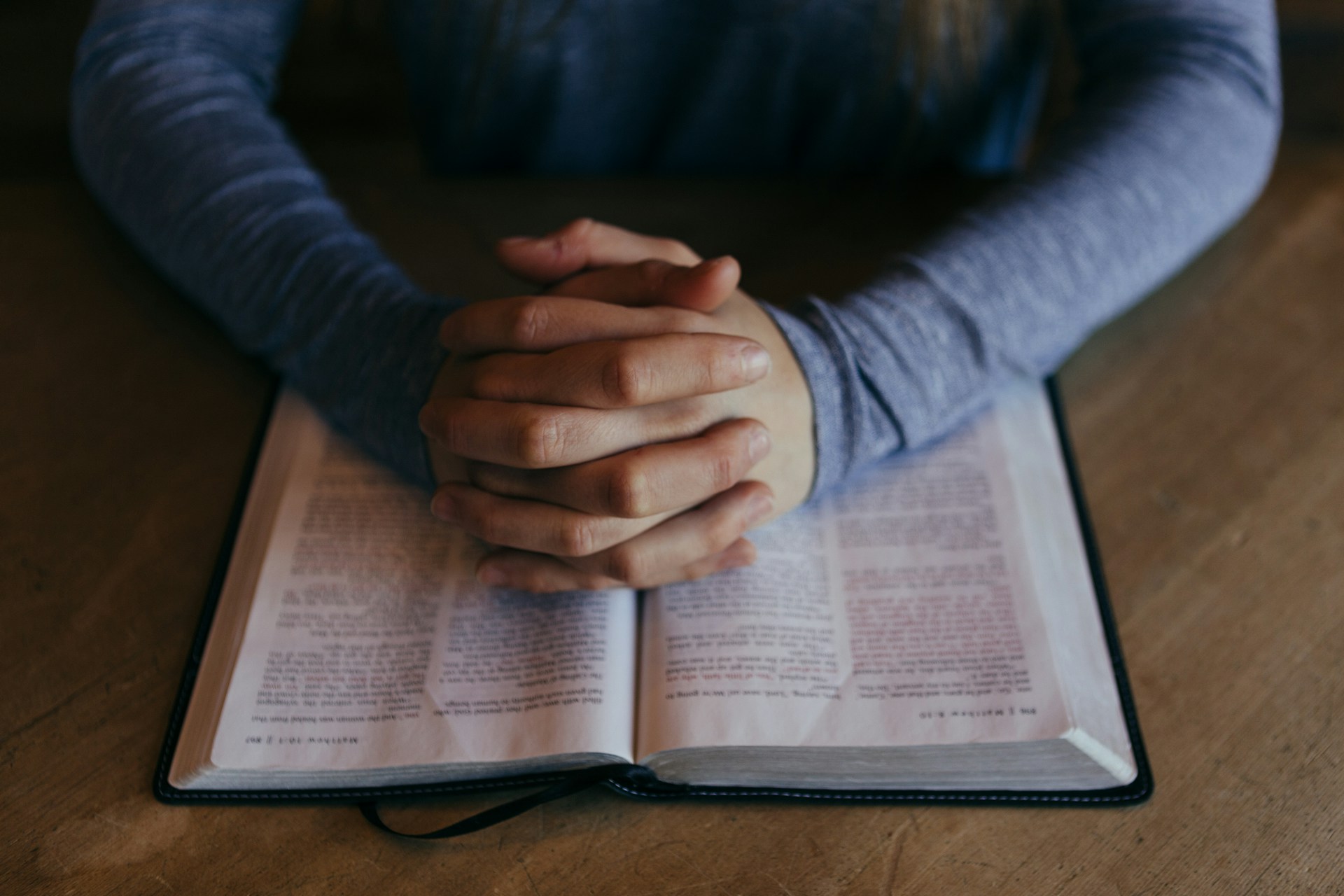
To get to where I am professionally, I have needed to be very good at taking tests. (Don’t worry, it gets nerdier). Therefore, when I needed to pass a test in all of American Literature from the beginning to 1865 (See, I told you so), I was confident. I had taken a number of courses in the field, and tests were my thing. So, I ‘studied,’ and I prayed. I studied a little bit more when I had time, and I prayed feverishly every night. After all, if God wanted me to get where he was sending me, a little supernatural help was not too much to ask. So, I kind of studied, prayed, read through my notes, prayed and … failed spectacularly! You all saw that coming though, didn’t you?
I, however, did not see it coming and grew increasingly angrier about what God had done to me. Why had he put me on this path to spend four years in its pursuit only to make me crash and burn now? Well, that was my general frame of mind when I went to church that Sunday, and the pastor preached on Deuteronomy 6:16 “Do Not Put THE Lord Your God To the TEST. (Emphasis mine, not Moses’.)
So my pastor was led to preach on a single Old Testament verse, which is odd, and it was pretty clear that this was a message sent directly-and pretty bluntly I might add-to me and my attitude. God had made me aware of what needed to be done and already given me the skills to pass this test. He had done all for me that should have been necessary if I had just gotten off my butt and gotten to work.
Standing in the Gap
The idea that God demands more of us than cruising through life, ignoring the spiritual gifts that He has given us and the crises in this world, has come to mind quite often over the last few years when human tragedy is met by the Christian Community with ‘thoughts and prayers’ and little, if anything, else. Now as I can feel the hackles being raised, I want to make clear that I am not discounting the power of prayer. Nothing in the world can happen without the direct hand of God, and prayer, particularly intercessory prayer is, perhaps, our greatest weapon here on Earth. But there have been times when God is clearly asking His people to do more.
In Ezekial 22, God has had it with the nation of Israel and charges them with cruelty, sexual and financial immorality, the shedding of blood, the creation of idols, slander, etc., and Ezekial is given the job to fix it. Not on his own, but he “looked for someone among them who would stand in the gap on behalf of the Lord.” And though intercessory prayer will always be a part of ‘standing in the gap,’ in many ways, to do this requires more than just silently appealing to God.
One way of looking at it should be familiar if you have ever seen an old Western. At some point, the good guys are trapped, surrounded by the bad guys, and one of the guys with a white hat, John Wayne perhaps, turns to his friends and yells over the gun fire, “You guys make a break for it, and I’ll cover you.” To Ezekial, the term ‘standing in the gap’ would have meant physically putting himself in a gap in the wall to prevent the enemy from entering. It is a means of acting in God’s stead to aid his people who are unable to aid themselves. And Ezekial, like John Wayne, is not solving the problem the world faces as much as protecting those who are at risk of harm by offering himself.
Esther
One of my favorite stories of a white hatted biblical character is Esther. You may be familiar with Esther being called by Mordecai, her uncle, to save the entire Jewish race from slaughter. To do this, she must break her husband, the King’s, command. She agrees to stand in between the power of the King and the people at risk, even if it meant her own death.
What is really interesting about this story is that everyone knew that God doesn’t need Esther at all to accomplish what he wishes to do. Mordecai tells her that “If you remain silent at this time, relief and deliverance for the Jews will arise from another place” (4:14). When God asks us to work for Him in this way, it isn’t because He can’t do it Himself. Instead, it is because He wants us to use the blessings that He has given to us in ways which stretch our faith and trust in Him and to demonstrate that the evil in the world we live in must be confronted.
Obadiah and the Cave
A more subtle example of standing in the gap is Obadiah (not to be confused with the Minor Prophet). Obadiah was the chief advisor to two of the most despicable people in the Bible: Ahab and Jezabel. While I always imagined the fantastic entrance Esther must have made into King Xerxes court (she seems to me a woman who, if she is going to get killed for doing the right thing, she is going to be fabulous in the process), Obadiah chose a different approach. He served the evil rulers of Israel but chose to remain faithful to God. When Ahab’s wife placed a death sentence on all of the prophets of God, Obadiah saved 100 of these men very quietly by hiding them in caves and providing them with food and water during a famine.
As opposed to Esther, who was forced to make a public pronouncement of her opposition, Obadiah was able to keep it on the down low. That is until God wanted more from him. He later acts as the go between for Elijah and Ahab, an act that carries its own level of risk. “If I go and tell Ahab and he doesn’t find you, he will kill me” ( I Kings 18:12).
Obadiah was willing to do what God asked of him but preferred to remain anonymous (since this is the last time we hear from this Obadiah, I’m guessing he and his 100 prophets remained a secret). When asked to take a public role, he did not back down; he faced the risk and stood up for what and who he believed in.
Risk vs Reward
So, perhaps, God is asking you to do more, to stand in the gap. To use your prayers, your voice, your wallet, your body to stand in the way of protection for the children of God who are oppressed, threatened, afraid, poor, prisoners, foreigners, abused, forgotten…at risk. Now to be clear, though everything worked out for Esther, Obadiah, and, usually, John Wayne, there is a risk from standing up against worldly power in any of its forms. Stephen (Acts 6-7), Martin Luther King, Dietrich Bonhoffer paid with their lives, but even if you aren’t facing death, it is likely that standing in the gap will cause you to risk your reputation, your position, your wealth, your church, or your relationships. So why should we do it? Especially as, with Esther, God can do it on his own regardless of what we do, or like, Obadiah, we aren’t really getting anything out of it, or like John Wayne, you’re going to face the same evils in the next movie.
There are three reasons why God may be calling you to stand up. First, he is asking you to take sides and be seen for what you are. When Esther approached King Xerxes, she would no longer be known for her beauty or her position in the kingdom. She would forever more be seen as a Jew, a follower of the one true God. So, when you stand up for those who need your protection, you are becoming his hands and feet, a position you can never back away from.
Which leads to the second reason, when you allow yourself to come to the aid of those who are suffering, you are allowing yourself to feel with God’s heart. When God looks upon the pain and suffering that we allow to exist in this world, he must surely weep. “The Lord saw how great the wickedness of the human race had become on the earth…and his heart was deeply troubled” (Gen. 6:6). And, when you feel that pain, you will feel called to act.
And lastly, this is what God made us to do. We are only here for a short time, but we are here. I am confident that whatever gifts he has given me to work with on earth will pale in comparison to what I will find in heaven, so he created me to be of service here and now. To pray that I will see the world, through his eyes and with his heart, and will stand for those who are unable to stand for themselves, “and who knows but that you have come to this … position for such a time as this?” (Esther 4:14)
