
“Jesus spoke to them again in parables, saying: The kingdom of heaven is like a king who prepared a wedding feast for his son.” Matthew 22:1-2
Having grown up in a mid-size church, in a mid-size town, in a mid-size state in the Midwest, I must admit that I have not been to a great deal of wedding feasts, so for the benefit of my fellow middle class folk, I would like to revise Jesus’ version of the kingdom of heaven to something which may be more familiar to us than a Kingly feast… The Wednesday Night Pitch-In Dinner.
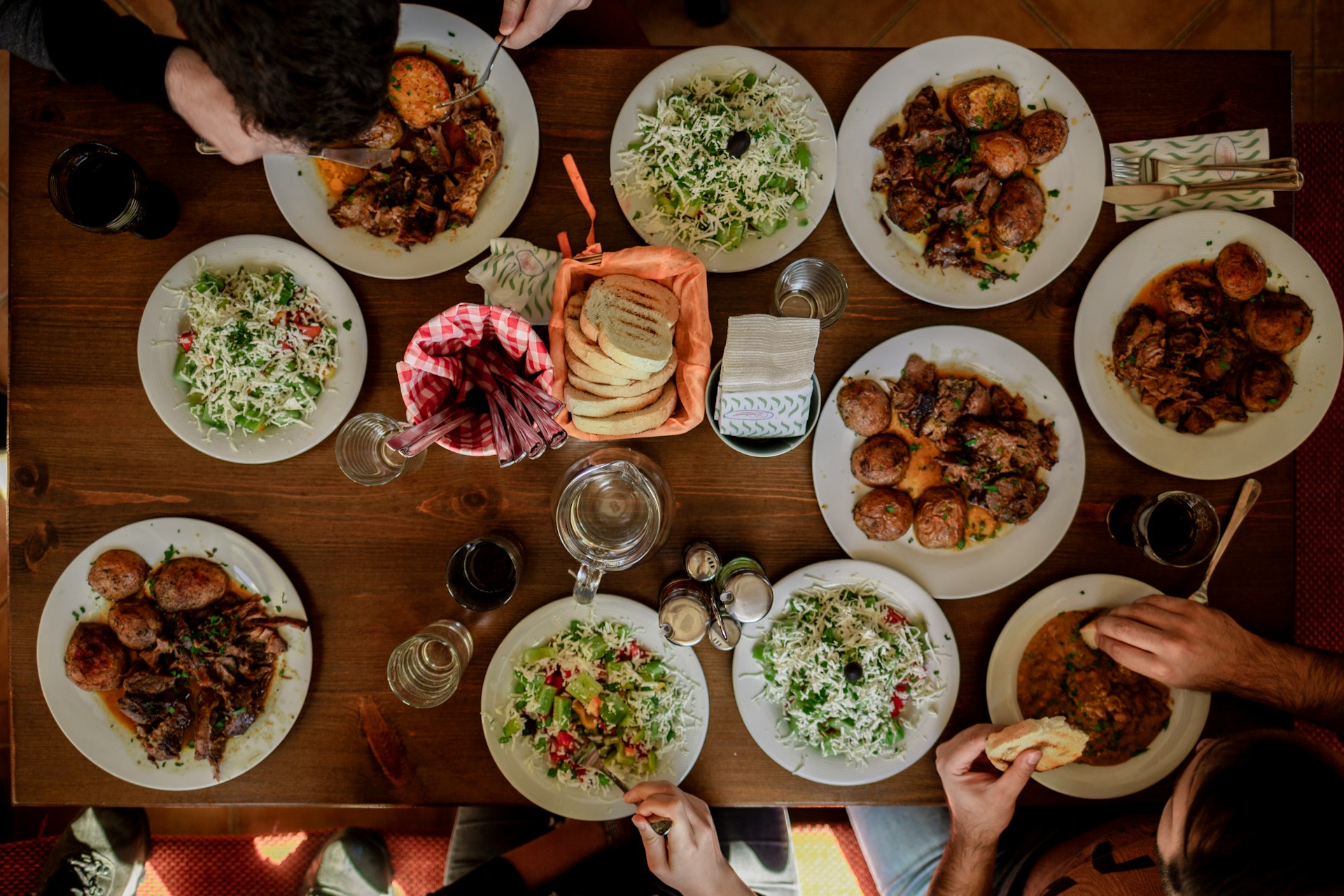
I’m not sure how different your experiences with churches have been, but in the late 1970’s-early 1980’s, my church had a series of Lenten Pitch-In Dinners every Wednesday. Now, it would probably be beneficial on my part to tell you, younger folk, what a pitch-in dinner consists of, as I am sure they would violate any number of current health codes. At a pitch-in dinner, the church would provide the main course, while every family or individual would bring (pitch-in) a part of the meal (a dish). It was glorious! Table after table of salads, vegetables, breads, and desserts. And though we would have some sort of edifying activity (usually a speaker) every Wednesday, the only thing I remember is the food. It was my first glimpse of what, I’m sure, heaven will be like.
Heaven as a Feast
But this also fits into Jesus’ understanding of Heaven. The Bible compares the feast and heaven in two places in the New Testament: Luke 14 and Matthew 22. The primary aspect of both of these stories is that we are all invited. Luke talks about the need to invite those we would consider outsiders. “But when you give a banquet, invite the poor, the crippled, the lame, the blind, and you will be blessed.” (13-14) While in Matthew, the servants are told “go to the street corners and invite…anyone you find… the bad as well as the good.” (10)
In the same vein, the key to a really good Pitch-in is the widest variety of options. If you have a sense of Midwestern cuisine, it tends to be a bit boring and repetitive. But I remember at one point in our church’s Lenten celebration, tucked in beside the jello salads and the carrot slaws was a dish of Mi Quang. I would imagine that it was pretty much untouched that first Wednesday, but we eventually learned to really enjoy it. This was the 1970’s remember, and church communities were asked to support Vietnamese refugees following the war. Our church invited two families to come to central Indiana, and they were welcomed into our church and into our feasts.
Who Wouldn’t Want to Go?
But in addition to the Pitch-in as a form of outreach to the lost and the stranger, Jesus spends much more time explaining about the people who should have been there and chose not to be. In Matthew, the invited chose to be about their own business of going to the field or to work. Some even went so far as to kill the people who had invited them. So though all are invited into the Kingdom of Heaven, and we expect to show, how much time are we spending preparing for this event? In the same path that we don’t want to be among the last-minute invitees, we do want to be consistently and fervently “about My Father’s business.”
There is a very odd addition to the story of the feast in Matthew. After the ‘good and the bad’ had shown up, the king came up to one guy. “He asked, ‘How did you get in here without wedding clothes, friend? The man was speechless.” And then, because of this apparent breach of etiquette, he was tied hand and foot and tossed out the door (22:13-14). As Craig Keener, Professor at Asbury Theological Seminary, remarks, “For the king graciously to extend the honor of an invitation to a banquet and be rebuffed as if his benefaction were meaningless was a traumatic breach of the social order.” This applied to both those who refused to come and those who came lacking the proper clothing.
The Joy of Working in Heaven
And even though the dress code at the Pitch-In was much less formal, there was still a very important role that must be played, and that is to ‘pitch-in.’ You were expected to bring your best, not to show off, but to bring joy to all who were there. My mom’s go-to was a marinated salad that involved two days of preparation, but then there were the Bickels, an older childless couple who also owned the local toy store (kind of sounds like the beginning of a Grimm’s Fairy Tale, doesn’t it?), who would bring an Ice Cream Cake every week. And though it was store-bought, there is no better way to get kids into church than an ice cream cake. My home congregation saw these dinners not only as a celebration but as an act of service.
The church itself also aided the congregation in playing the central role by serving a main course so dry and inedible that the focus would always be on the families’ contributions. The primary meal that I remember was ham loaf. Not only couldn’t we eat it, but the youth groups were also tasked with ‘ pitching in’ to clean the pans.
Beyond the wealth and glory of the feasts described in the New Testament, I also think that the Midwestern Pitch-in Dinner is what heaven will be like. No, I’m not saying that the heavenly chow line will consist of unappetizing pork by-product, and no, I’m not saying that God could not provide the best and the choicest for his people. I just don’t know if heaven should be an eternity of sitting around being joyful. I can see a path where we are still able to ‘pitch in.’ In John’s depiction of Heaven in Revelation, he points out that “his servants will serve him” (22:3), but then, we will be able to serve without the limitations of sin and guilt.
In other words, my voice in the choir will no longer be strained on the high notes, my mother will no longer feel compelled to hold off on the olives in her salad out of fear of what other people will think, and most of all, the ham loaf will no longer be nasty.
Amen.
